General Motors

Automating difficult manual tasks in the Silverado EV

Solution
I replaced complex manual configurations with proximity-based intelligence, utilizing UWB technology to create a seamless transition between the driver’s digital life and the physical vehicle environment.
Problem
How can Ultra-Wideband (UWB)* technology's precision fundamentally improve the driver experience in the Chevrolet Silverado EV?

*UWB: a precise, short-range wireless communication system that provides centimeter-level location accuracy
Role
Product Designer
Year
2025
Deliverables
User Interviews
Competitive Analysis
Wireframes
Prototypes
Style Guide
Usability Tests
Stakeholder Presentation
Duration
4 months
Team
Course Instructor (PM)
Product Designer @ GM
This project was completed for SI594: Automotive UX at the University of Michigan.
Outcomes: What I did

Key features of the vehicle experience

UWB-Enabled Precision Solo Trailering

Precise trailer hitching usually requires a spotter and multiple manual corrections.

Automatic Personalized Comfort Powered by UWB

The need to constantly adjust personalized settings in a shared vehicle is eliminated with UWB-enabled profiles.

Driver-Centric Interface

The specificities of the driving experience were kept front and center when designing the layout of the center console screen.
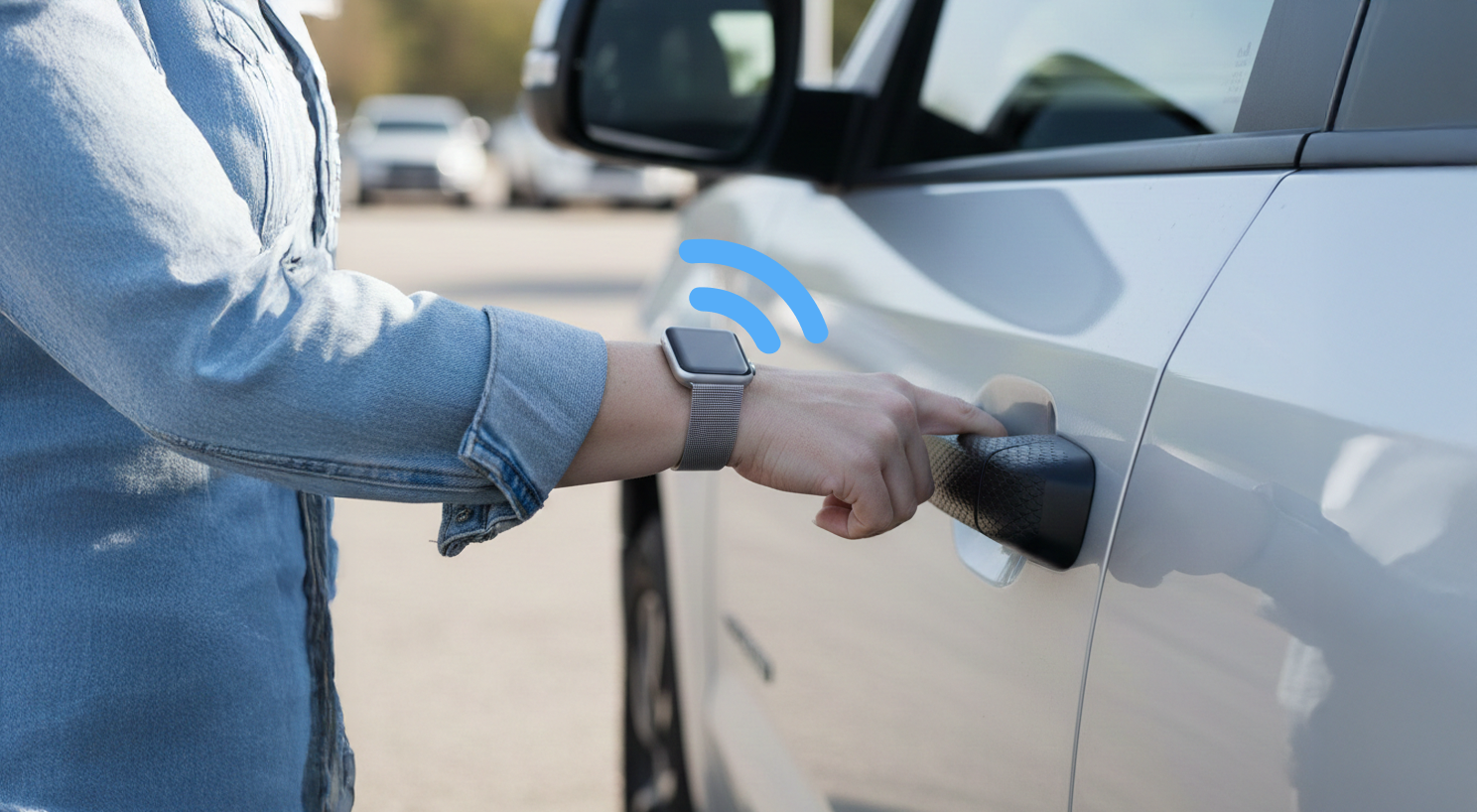
Extended Ecosystem Control (Mobile App)

The vehicle experience starts before the driver enters and ends after they leave.

Problem Statement & Opportunity Exploration

Where can UWB have the most impact?

Our directive was to identify where the centimeter-level precision and seamless detection of UWB could deliver the most value.

After conducting research on the technology, I quickly realized that a common benefit of UWB is personalization and automation. In a vehicle, I could easily identify several types of manual activities which were the problems waiting for a UWB solution.

"We are challenging you to look ten years into the future and ask: What does a truly seamless and intuitive vehicle experience look like?"
— Joe L., Design Team Lead at General Motors
Actions:
menu_book
UWB Literature Review
graph_2
Opportunity Mapping
Insights from User Research

Reliance on manual processes compromises a premium experience

3 of the 4 participants said that they frequently share their vehicle with a spouse or family members. Reconnecting their phones for using the infotainment was a highly cited annoyance for these drivers.


100% of participants who share a vehicle always manually adjust their seat, but rarely adjust the mirrors or steering column due to the effort required. This is a major safety issue as well as a compromise on comfort.


Both participants who use a trailer with their vehicles noted that hitching is a multi-person, high-stress task that takes up a lot of time and often ends in an argument.

Actions:
forum
4 User interviews
sticky_note_2
Affinity mapping
checklist
Competitive analysis
Designing a Solution

A driver-centric experience with frictionless personalization

To overcome these pain points, I came up with a driver-vehicle-trailer system that automates the high-friction parts of the user journey using UWB.
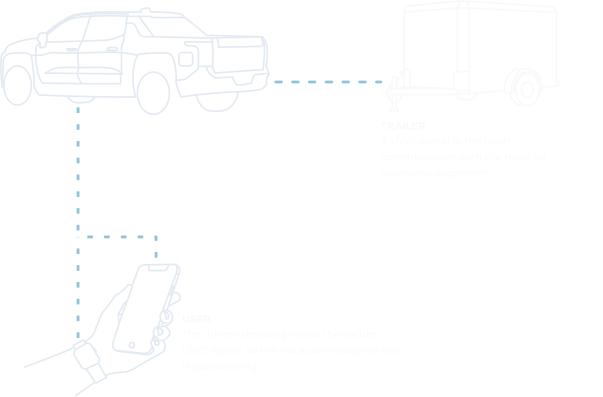
When designing the interface, I applied the most relevant UX laws and heuristics to automotive design.

System Diagram
Fitt’s Law:
Larger, closer targets are faster to reach, while smaller, farther targets take longer.
Visibility of System Status:
The design should always keep users informed about what is going on.
Actions:
flowchart
User flows
web
Wireframing
rocket_launch
Figma prototyping
Usability Testing

Testing revealed information architecture improvements

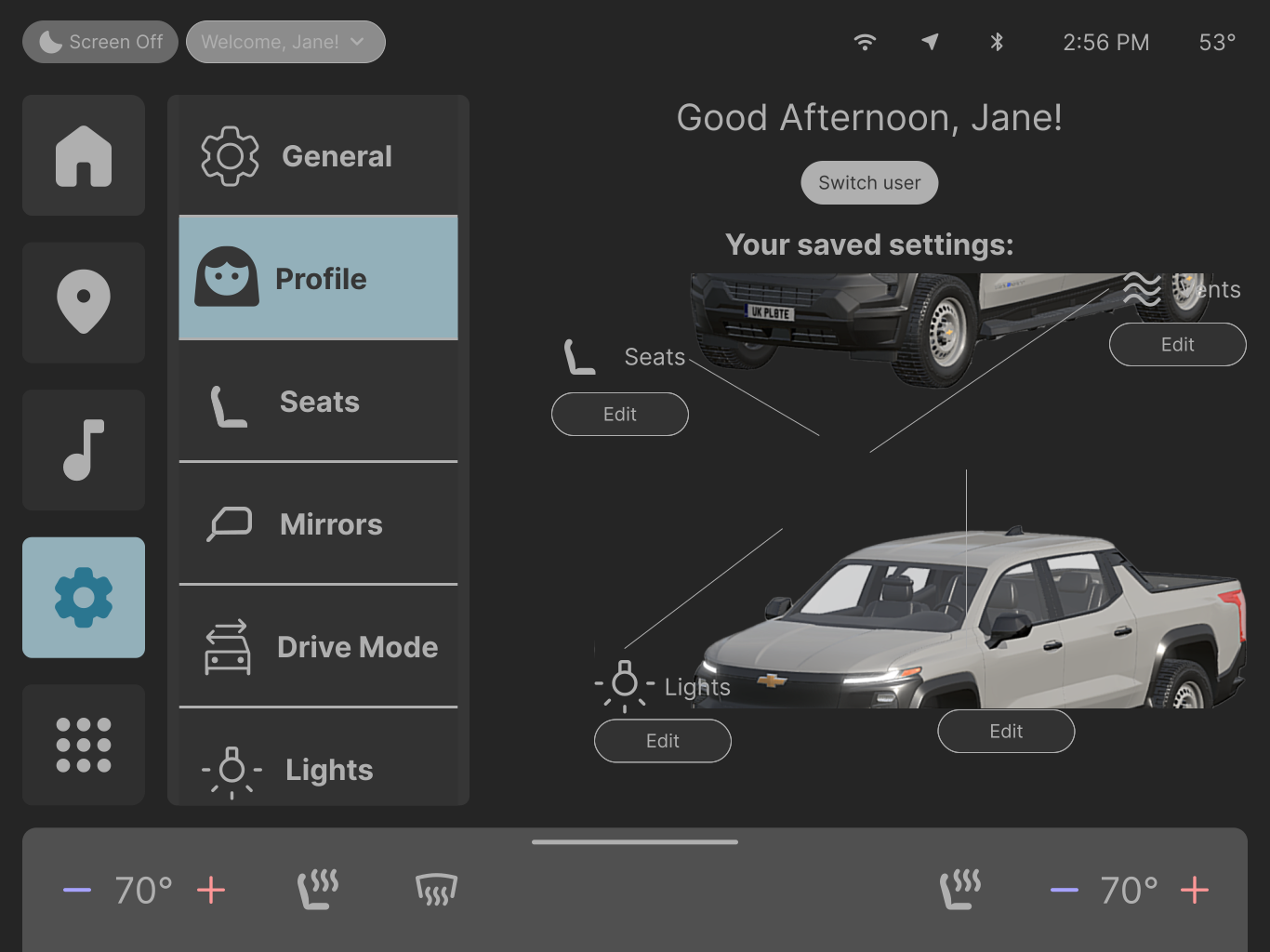
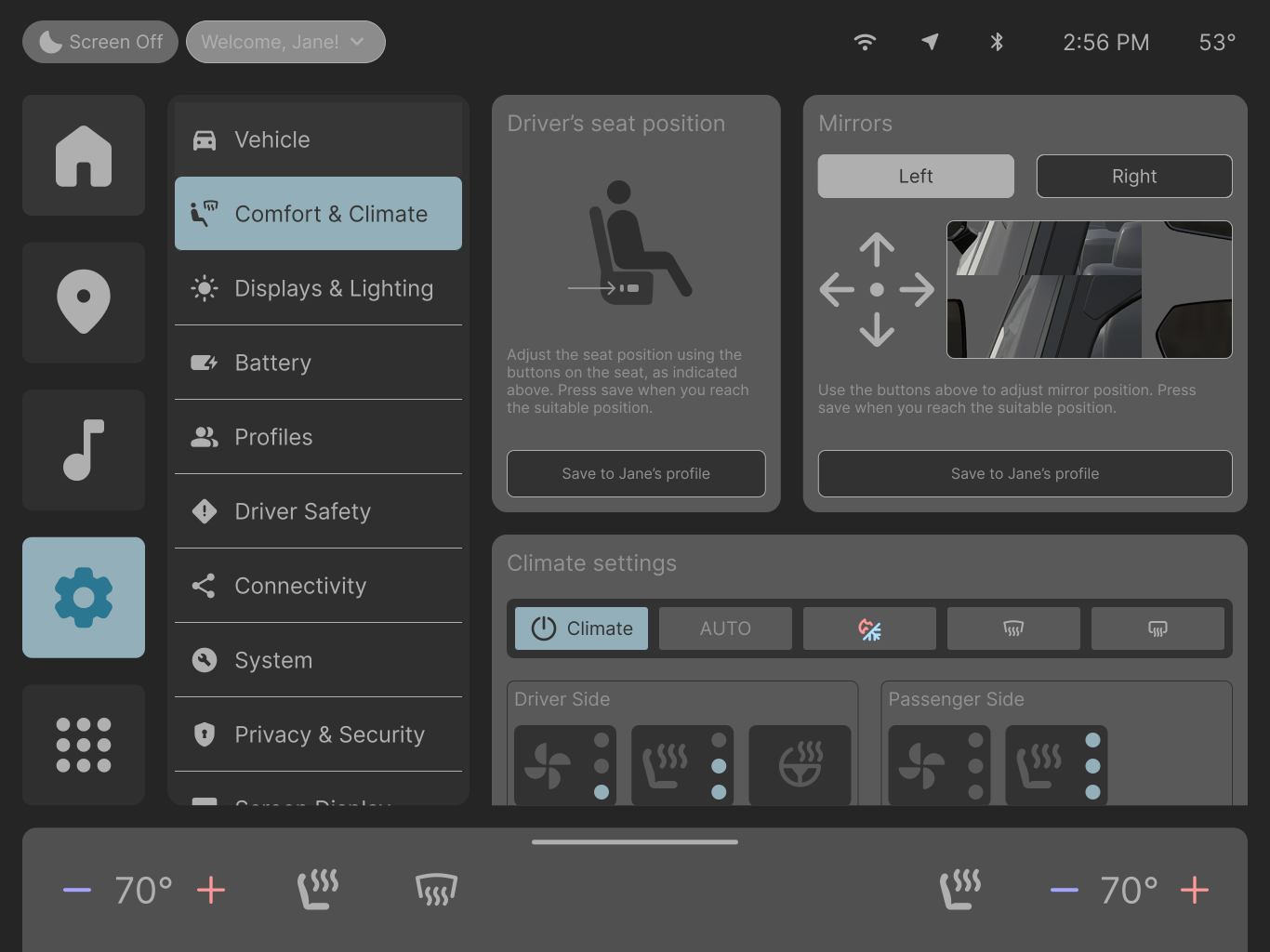
I initially thought drivers wanted a 'Personalization Hub.' However, testing with users revealed that it was more intuitive to personalize the individual features under their respective sections rather than under a profile section.
Before
The ergonomic settings that were triggered by a UWB-enabled profile all lived under a single 'profile' page, where drivers could go to adjust and update them.
After
To make it more intuitive, I eliminated the 'Profile' settings page and separated out each ergonomic setting by category with an 'update profile' button under each.
Actions:
feature_search
4 Usability tests
Final Design

Where we landed: Seamless driver identity, instant comfort, and effortless trailering

By leveraging UWB’s pinpoint accuracy, the design automatically identifies the driver, loads their ergonomic and comfort preferences on entry, and empowers them with hands-free trailer hitching that removes one of the most frustrating tasks of driving a large vehicle.

Conclusion

Outcomes & Feedback

At the end of this project, I had the opportunity to present my designs to stakeholders from the General Motors design team.

“The approach you took to integrate UWB is realistic and grounded. I can genuinely see these features being implemented in our vehicles in the near future.”
— Product Designer at General Motors

Up Next: UofM Library

Library Search "Everything" results